Kyoto Events 2026: Exhibitions, Performances and Seasonal Nights
Choose the Kyoto day by event shape: an indoor exhibition, a fixed-start stage performance, a route-viewing procession, or a later-season temple night. Pick one district before adding a second stop, and use each card’s status and exact date. The ended KYOMAF record is archive context, not a current weekend anchor.
October 15, 2026 · 3:30 PM start; End time not published & October 16, 2026 · 3:30 PM start; End time not published & October 17, 2026 · 3:30 PM start; End time not published & October 18, 2026 · 3:30 PM start; End time not published & October 19, 2026 · 3:30 PM start; End time not published & October 20, 2026 · 3:30 PM start; End time not publishedPerforming artsToday
Pontocho’s 111th Suimeikai presents a six-day autumn programme at Pontocho Kaburenjo. One performance begins daily at 15:30, with doors at 15:00. The repertoire combines tokiwazu, kiyomoto and nagauta works, while Kyoto City Tourism Association describes the total running time as under two hours without publishing an exact finish.
The programme opens with the tokiwazu piece Matsu no Hagoromo and the kiyomoto work Yasuna, then expands into the nagauta sequence Hana Koi Pontocho Ade Kurabe. Its sections move through Sukeroku, Onna Date, Yoshiwara Suzume, Shichifukujin, Rokusai Nenbutsu, Shizuhata Obi, Fuji Ondo and Sagi Musume before the finale. This gives the performance a defined dramatic and musical arc rather than a generic showcase.
Choose Suimeikai for Pontocho’s own autumn repertoire and historic theatre setting. The single daily start makes it an itinerary anchor: arrive for 15:00 doors, and keep the evening flexible because “under two hours” is not an exact end time.
Official source noteAccess tipsGoogle Maps readyCheck before going
Venue
Pontocho Kaburenjo
Nearest station
Sanjo Station (Keihan Main Line), exit 6, about 5 minutes on foot
Reservation
Not confirmed — check the official page
July 11, 2026 – November 23, 2026Cultural exhibitionsOngoing
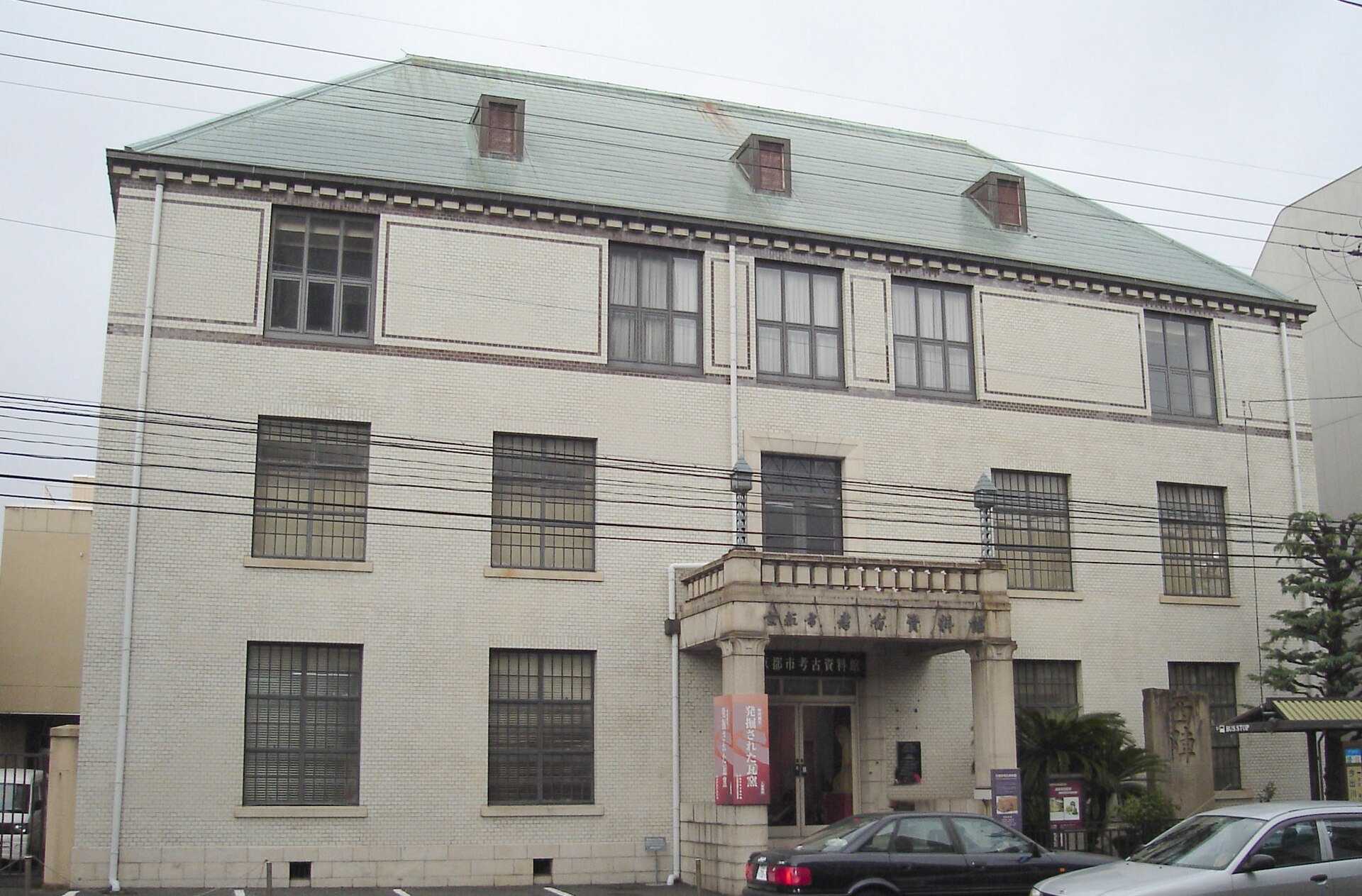
2005 museum exterior · old banner, not this exhibitionPhoto: PlusMinus · Wikimedia Commons · CC BY-SA 3.0 · Resized and cropped for display
At Kyoto City Archaeological Museum, excavated objects, maps and photographs explain how Toyotomi Hideyoshi changed Kyoto in little more than a decade. Castles, new roads, temple districts and earthworks reveal a city repeatedly reshaped, rather than an ancient street plan left untouched.
The exhibition follows six themes: Kyoto before Hideyoshi; Myokenji Castle and Jurakudai; the Tensho-era land divisions, Teramachi, Odoi earthworks, Kyoto Shinjo and the court-noble district; Fushimi and Yodo castles; Hokoji’s Great Buddha; and tea ceramics excavated in Kyoto. This range links political projects to changes in the streets and objects of everyday urban life.
A particular highlight is the gold-leaf roof tiles from Fushimi Castle excavated at Toryo Junior High School. Alongside the artifacts, excavation photographs and historical map panels help relate fragments to places. The introduction also shows an excavation photograph of Shigetsu Fushimi Castle’s stone wall: viewing it as archaeological evidence helps connect a vanished complex with what survives below ground.
Official source noteAccess tipsGoogle Maps readyCheck before going
Venue
Kyoto City Archaeological Museum — 1F special exhibition
Reservation
Not confirmed — check the official page
July 28, 2026 – December 20, 2026Cultural exhibitionsOngoing
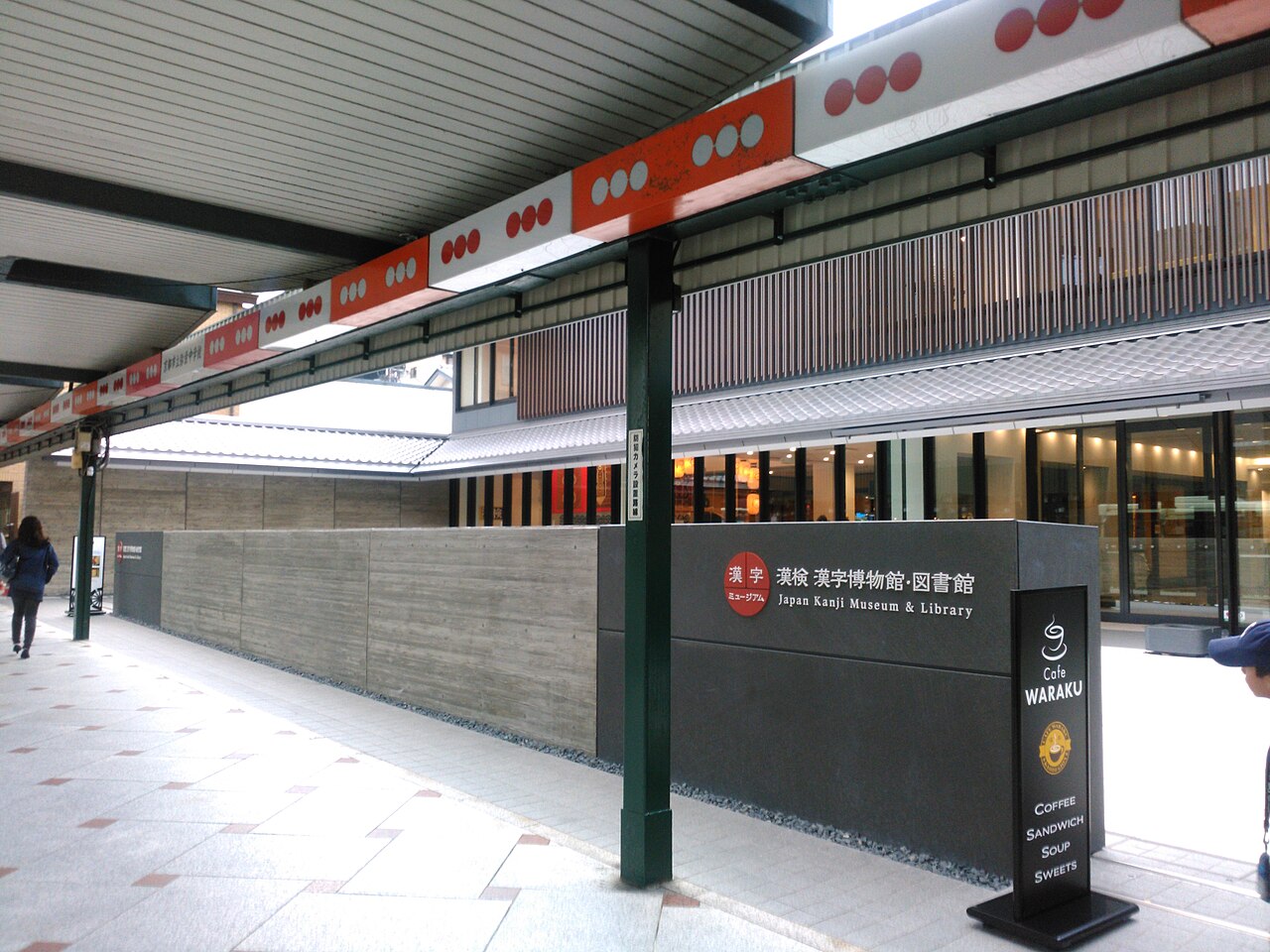
2017 museum entrance · old café sign, not this exhibitionPhoto: Lundariokn45 · Wikimedia Commons · CC BY-SA 4.0 · Resized and cropped for display
The Kanji Museum uses familiar Chinese dish names to explore characters, cooking methods and the way food culture changes between China and Japan. Its second-floor exhibition combines word games, hands-on displays and a restaurant-style photo set. This is a language and culture visit, not a meal or tasting event.
Six elements turn the theme into something you can explore. Pose in a Chinese-restaurant-style photo booth, then try an ingredient and dessert quiz: read the Chinese names, use the hints and open the doors to find their Japanese equivalents. A rotating table lets you connect dish names with the characters for cooking methods.
The other sections explain the origins of names such as gyoza, spring rolls and bangbang chicken; introduce Chinese regional cuisines through their characteristics and seasoning words; and look at dishes developed in Japan, including ramen and Tenshinhan. Together they show how familiar menu words can carry a method, a story or a change of cultural context. The photo set represents a restaurant; it does not serve food.
Official source noteAccess tipsGoogle Maps readyCheck before going
Kyoto National Museum’s 2026 special exhibition traces how The Tale of Genji shaped manuscripts, painting, decorative arts, textiles and performing traditions across centuries. The travelling project is planned around approximately 250 cultural properties across its venues; for Kyoto, the museum’s dated object list is the guide to what is actually on view on each visit date.
Choose your date around the work you most want to see. The National Treasure Tale of Genji Scroll shows Hashihime from 3–15 November and Yadorigi III from 17–29 November. The Teika manuscript Wakamurasaki is shown throughout, while all five surviving Teika Genji volumes appear together only from 3–15 November. Part I, 6 October–1 November, includes the Wakamurasaki leaf from an Important Cultural Property album, a portrait of Murasaki Shikibu and the Sekiya/Miotsukushi screens. Part II, 3–29 November, includes a pale-blue kosode. The Hatsune trousseau Uji incense box and Uji Princesses are listed throughout.
This is a strong reason to plan a Kyoto museum visit by date rather than by the exhibition title alone. Some objects rotate within the two broad parts, and the museum may change works or display periods, so check the current Kyoto object list before travelling.
Official source noteAccess tipsGoogle Maps readyCheck before going
Venue
Kyoto National Museum, Heisei Chishinkan Wing
Nearest station
Shichijo Station (Keihan Main Line), about 7 minutes on foot
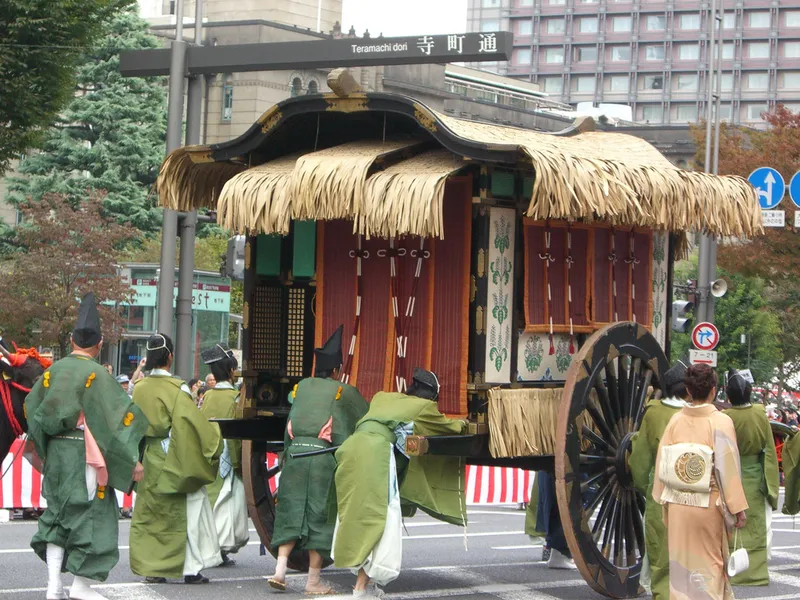
2007 procession · historical referencePhoto: Conveyor belt sushi · Wikimedia Commons · CC BY 2.0 · Resized and cropped for display
Jidai Matsuri 2026 is a route-viewing Kyoto festival day, not a single-stop attraction. The safest plan is to choose one viewing anchor, understand the official procession timing, and leave room for a same-day weather and status recheck.
A strong choice for travelers who want Kyoto history, traditional costume processions, and a slower one-anchor sightseeing day. It is less suitable as a casual drop-in if you dislike waiting, route-based walking, or day-of weather uncertainty.
Official source checkedAccess tipsGoogle Maps readyTravel notes included
Venue
Jidai Matsuri Procession Route Area
Nearest station
丸太町駅 Marutamachi Station (Kyoto City Subway Karasuma Line, 5-minute walk to Kyoto Gyoen start-area anchor) / 東山駅 Higashiyama Station (Kyoto City Subway Tozai Line, Exit 1, 10-minute walk to Heian Jingu finish anchor) / 神宮丸太町駅 Jingu-Marutamachi Station・三条駅 Sanjo Station (Keihan Oto Line, 15-minute walk to Heian Jingu finish anchor)
Reservation
Usually not required
November 1, 2026 · 1:30 PM start; End time not published & November 1, 2026 · 4:00 PM start; End time not published & November 2, 2026 · 1:30 PM start; End time not published & November 2, 2026 · 4:00 PM start; End time not published & November 3, 2026 · 1:30 PM start; End time not published & November 3, 2026 · 4:00 PM start; End time not published & November 4, 2026 · 1:30 PM start; End time not published & November 4, 2026 · 4:00 PM start; End time not published & November 5, 2026 · 1:30 PM start; End time not published & November 5, 2026 · 4:00 PM start; End time not published & November 6, 2026 · 1:30 PM start; End time not published & November 6, 2026 · 4:00 PM start; End time not published & November 7, 2026 · 1:30 PM start; End time not published & November 7, 2026 · 4:00 PM start; End time not published & November 8, 2026 · 1:30 PM start; End time not published & November 8, 2026 · 4:00 PM start; End time not published & November 9, 2026 · 1:30 PM start; End time not published & November 9, 2026 · 4:00 PM start; End time not published & November 10, 2026 · 1:30 PM start; End time not published & November 10, 2026 · 4:00 PM start; End time not publishedPerforming artsUpcoming
Gion Higashi presents its ten-day autumn dance programme at Gion Kaikan, with performances at 13:30 and 16:00 each day. The approximately one-hour production brings together geiko and maiko in an original-script sequence of nagauta and kiyomoto dance, followed by the Gion Higashi Kouta finale.
The value is in seeing one hanamachi’s own stage tradition rather than a general Kyoto dance sampler. The programme moves through a choreographed medley before the full-company finale sings of the seasons around Gion Higashi. Its annual November run gives a Gion visit a specific scheduled performance to build around.
Choose the earlier or later performance around the rest of your Gion day. Doors open around 40 minutes before curtain time. If you buy the tea-included ticket, the tea service is a separate arrangement: it begins one hour before the performance and ends five minutes before curtain.
Official source noteAccess tipsGoogle Maps readyCheck before going
Venue
Gion Kaikan
Nearest station
Gion-Shijo Station (Keihan Main Line), about 10 minutes on foot
Reservation
Not confirmed — check the official page
November 12, 2026 · 4:00 PM start; End time not published & November 13, 2026 · 4:00 PM start; End time not published & November 14, 2026 · 4:00 PM start; End time not published & November 15, 2026 · 4:00 PM start; End time not published & November 16, 2026 · 4:00 PM start; End time not published & November 17, 2026 · 4:00 PM start; End time not published & November 18, 2026 · 4:00 PM start; End time not publishedPerforming artsUpcoming
Kamishichiken’s annual autumn performance brings geiko and maiko to the stage of Kamishichiken Kaburenjo for five named works of dance, song and shamisen. One performance begins at 16:00 on each of the seven days, with doors at 15:30. Kyoto City Tourism Association describes the running time as approximately two hours; no exact finish time is published.
The programme is specific enough to choose this event for the repertoire, not simply for a generic hanamachi atmosphere. It includes the nagauta works 宝船, 屋敷娘, 旅 and 棒しばり, together with the sōfūraku work 田螺. The changes in group size and performers across those works give the evening a sequence of distinct scenes.
The setting adds a second reason to go: Kyoto City tourism describes Kamishichiken as the city’s oldest hanamachi and the theatre as normally closed to the general public. Attend for the scheduled performance rather than expecting an unscheduled building visit.
Official source noteAccess tipsGoogle Maps readyCheck before going
Venue
Kamishichiken Kaburenjo
Nearest station
Kitano Tenmangu-mae or Kamishichiken bus stop, about 3 minutes on foot
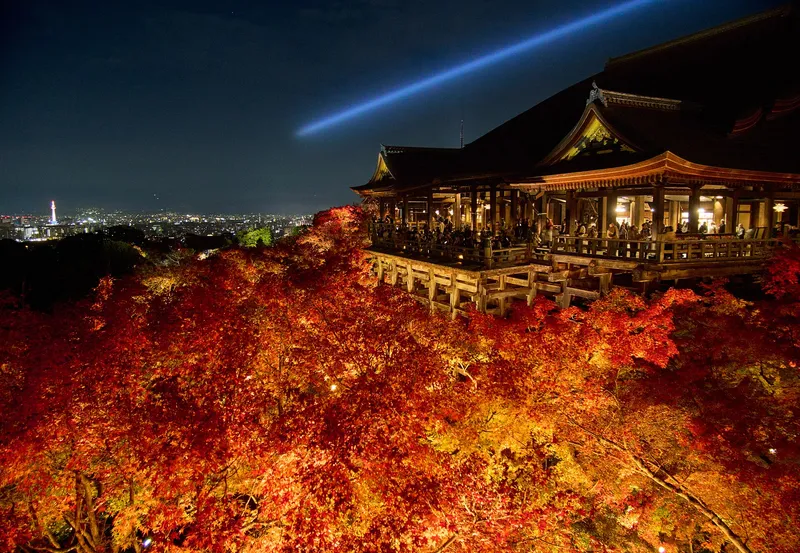
Autumn illumination context · capture date unconfirmedPhoto: lumoplank · Wikimedia Commons · CC0 1.0 · Resized and cropped for display
Kiyomizu-dera Autumn Night Viewing 2026 gives Kyoto visitors a classic Higashiyama evening plan, but the climb, crowds, and return trip matter as much as the view. Treat it as a timed night outing with a clear route in and a clear route out.
A strong choice if you want a memorable Kyoto autumn night and are comfortable with uphill walking, evening crowds, and a planned return. It is less suitable as a spontaneous add-on for travelers with luggage, mobility limits, or tight back-to-back reservations.
Official source checkedAccess tipsGoogle Maps readyTravel notes included
KYOMAF 2026 is a ticketed multi-venue anime and manga event centered on Miyako Messe and ROHM Theatre Kyoto, with Kyoto International Manga Museum as Venue 2. For most travelers, it works best as a preplanned convention day rather than a casual sightseeing stop.
A strong fit for anime and manga fans who are happy to check ticket categories, queue risk, and stage rules before arrival. It is less suitable for casual Kyoto travelers who want a quiet day, fully spontaneous entry, or certain access to every highlight.
Official source checkedAccess tipsGoogle Maps readyTravel notes included
Venue
Kyoto International Manga Anime Fair Venue Area
Nearest station
東山駅 Higashiyama Station (Kyoto City Subway Tozai Line, 8-minute walk) / 三条駅 Sanjo Station・三条京阪駅 Sanjo Keihan Station (Keihan Line / Kyoto City Subway, 16-minute walk) / 岡崎公園 ロームシアター京都・みやこめっせ前 Okazaki Koen ROHM Theatre Kyoto / Miyako Messe-mae bus stop (immediate access)
Reservation
Check ahead
Visitor planning notes
Use the visible cards to choose among an indoor exhibition, a fixed-start performance, Jidai Matsuri’s procession, or Kiyomizu-dera’s autumn night viewing. These are different day shapes, so keep one district as the anchor before adding a second stop.
Use each card’s status and exact date. The ended KYOMAF card is archive context, not a current weekend anchor.
An exhibition, a fixed-start performance, a procession and a temple night use different parts of the day. Choose one format first, then keep the route inside one district where possible.
Use the card’s opening detail for an indoor exhibition.
Treat a fixed-start performance as the day’s hard commitment.
For Jidai Matsuri or Kiyomizu-dera night viewing, plan the viewing area and return before adding another stop.
Getting around
Kyoto Station is the simplest arrival anchor. From there, group plans by Higashiyama, Okazaki, Gion, the Imperial Palace area, or northern Kyoto rather than jumping across town.
Use Kyoto Station for arrivals and backup routing.
Pair Higashiyama and Gion when walking time matters.
Give buses, taxis, and walks more buffer on busy dates.
Crowd and weather cautions
Kyoto can feel crowded even when distances look short. Processions, temple-area events, heat, rain, and narrow streets can slow down movement, so keep the plan intentionally light.
Avoid tight transfers between traditional events.
Check route changes for processions and festivals.
Carry a quiet fallback for rain or heat.
Move light and share Kyoto's streets
Plan your luggage and district approach before you start sightseeing. Kyoto's official guidance presents storage or delivery as options, points visitors toward rail or subway stations near their destination, and asks them to move considerately through residential and religious neighborhoods.
Before setting out, consult the official hands-free directory for a storage or delivery option, then verify the provider, location, hours and fee yourself.
Choose a rail or subway approach near your destination before defaulting to a bus-only plan, and confirm the current connection with the transport operator.
In Gion and Higashiyama, stay out of private property, photograph only where permitted, and step aside before stopping so the street remains passable.
A Kyoto anchor that keeps the day legible
Plan Kyoto by district. One clear northwest anchor is more useful than losing the day to repeated cross-city bus journeys.
Photo: Site owner/Owner-provided site photo
Northwest Kyoto without the bus gamble
Use Kinkaku-ji and Kinugasa as one northwest Kyoto block rather than attaching them to a distant Higashiyama day. The owner photo provides route context only; current opening hours, admission, and transport notices still need an official check.
Route
Kyoto Station → Karasuma Line → Kitaoji → Kinkaku-ji / Kinugasa
Planning judgment
Kyoto's official visitor guidance recommends using the subway before the final bus leg instead of relying on a direct cross-city bus from Kyoto Station when roads are congested.
Choose one Kyoto district first, then check whether the day still works: walking load and a heat or rain fallback, procession or festival transport changes, and the group’s luggage or accessibility needs. Use this city page to compare areas; confirm current route, access, weather and restrictions on the official event and transport pages.
Autumn and winter items worth watching as route anchors. Published guides link to full visitor notes; planning-only leads still start from official sources.
Kiyomizu-dera autumn night viewing
Use this as an autumn evening anchor for Higashiyama, with extra time for temple-area crowds and closing-time checks.
Timing
Official annual-event page lists November 21-30, 2026
Area
Kiyomizu-dera / Higashiyama
Full event guide is published here; still confirm opening hours and reception cutoff on the official page before travel.