Van Gogh's Drawbridge and the Impressionists — Nagoya
Nagoya City Art Museum brings together 70 paintings by 42 artists from Cologne’s Wallraf–Richartz Museum & Fondation Corboud. Six sections follow painting from Realism and the Barbizon school through Impressionism, Post-Impressionism and Pointillism to 20th-century colour. Van Gogh’s Drawbridge is part of this wider story of artists finding new ways to see and paint.
Travel action
Open the route before you go
Use Google Maps as the final navigation check. Event areas, crowd controls, and station exits can change on the day.Event area
Check the venue or main event area and save it before leaving your hotel.
Nearest station
Check the station-side approach and keep one backup return route.
Photos
Photos and place context
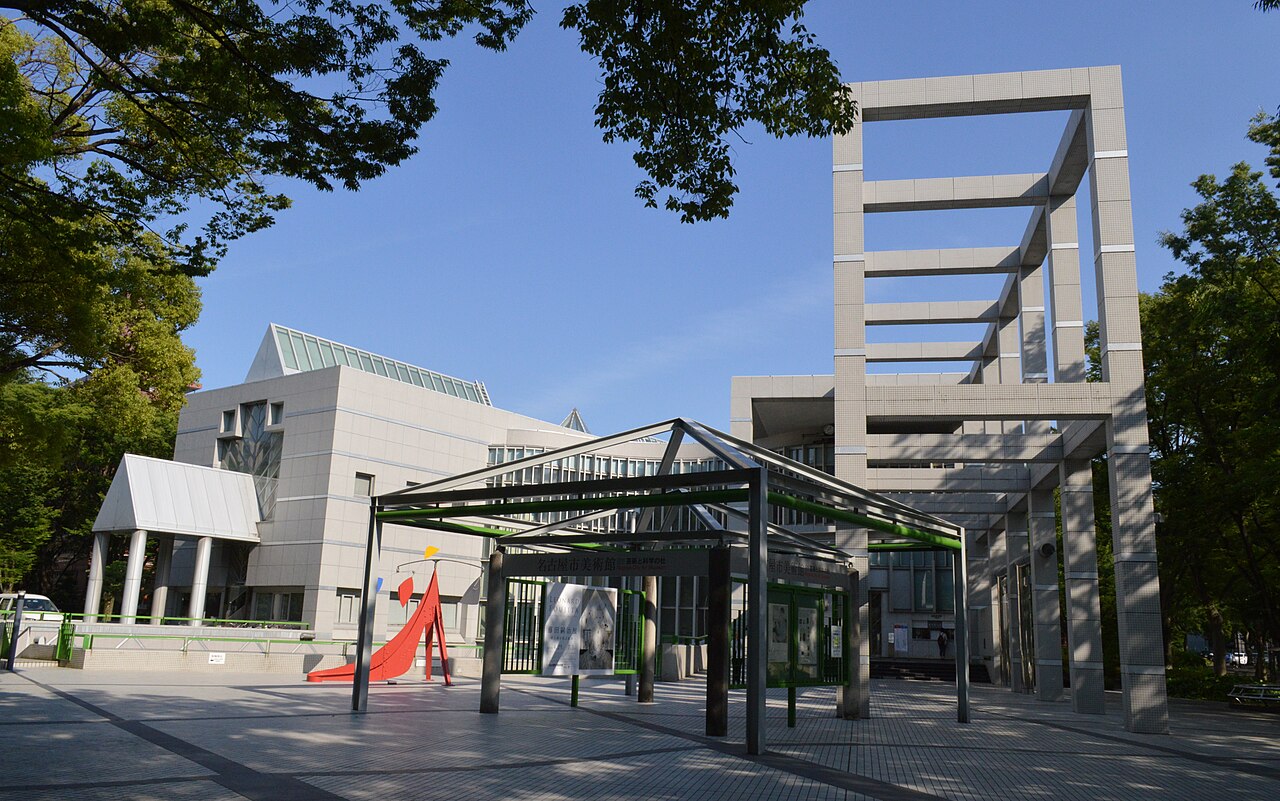
Nagoya City Art Museum in Shirakawa Park, photographed in 2016. This historical venue view does not show the 2026 Van Gogh exhibition. Photo title: “Nagoya City Art Museum ac.jpg”. Wikimedia Commons resized this version; no further edits.
Photo: Asturio CantabriosourceCC BY-SA 4.0
Visitor verdict
Begin with the contrast between Van Gogh’s 1885 painting of a farmhouse in Nuenen and his 1888 Drawbridge. Seeing the two within a larger exhibition lets you compare his work with different approaches to landscape, everyday subjects and colour, rather than treating the famous bridge as an isolated highlight. The selection also includes Manet’s bunch of asparagus, Monet’s fishing boats at Étretat, Cézanne’s still life with pears, Signac’s Capo di Noli and Matisse’s old mill in Corsica. Follow the six sections and compare how recognisable subjects are constructed through brushwork and colour. The sequence connects the painters who preceded Impressionism with those who developed different forms of expression after it. The published checklist contains 70 entries, although the museum notes that displayed works may change.
Visitor friendliness
5 means easier and more rewarding for first-time visitors.
- Language friendliness
- Not scored
- Reservation ease
- Not scored
- Transport ease
- Not scored
- Crowd comfort
- Not scored
- Rain resilience
- Not scored
Practical information
- Reservation
- Not confirmed
- Tickets / booking
- Regular admission is ¥1,900 for adults and ¥1,000 for high-school and university students. Junior-high students and younger visitors enter free; bring the required student identification. Holders of the specified disability or medical-assistance certificates, with proof, and up to two companions receive half-price regular admission. Ordinary exhibition tickets also include the permanent collection during the run. Standard exhibition admission has no published mandatory timed reservation; the workshops and the 26 October sessions require separate advance applications.
- Price note
- Regular adult ¥1,900; high-school/university ¥1,000. Junior-high and younger free with required proof. Defined certificate concessions apply; separate programme booking rules apply.
- Access
- The museum is in Shirakawa Park at 2-17-25 Sakae, Naka-ku, Nagoya. From Fushimi Station, walk south for eight minutes from exit 5; from Osu Kannon Station, walk north for seven minutes from exit 2; or from Yabacho Station, walk west for ten minutes from exit 4. The museum has no visitor parking; nearby paid parking is separate.
- Rain
- The paintings are indoors, making this a practical option for a rainy day, but the walk through the park remains outdoors. Leave time to reach admission before 16:30 on ordinary days or 19:30 on Fridays. A Friday evening visit uses the later opening without changing the published closure calendar.
- Crowds
- Katsunori Fukaya gives three lectures on 27 September, 24 October and 22 November, covering Realism and the Barbizon school, Impressionism and Post-Impressionism, then Pointillism and colour. Each starts at 14:00 in the second-floor hall and lasts about 90 minutes. Admission is first come, up to 180 people, with an exhibition ticket or used stub and no additional fee. The colour workshop combines looking with a worksheet and making a painting. The 2 October session, 18:00–19:30, is for high-school age and above, with 15 places. The 3 October sessions, 10:00–11:30 and 14:00–15:30, are for primary and junior-high pupils, with 15 groups per session and up to three people per group; primary pupils must have a guardian. Advance application is required. The activity is free, but high-school age and above need exhibition admission. 26 October remains closed for ordinary visits. Its separately booked slow-viewing sessions are 10:00–11:30 for families with preschool children, with at least one adult per preschool child, and 13:30–15:00 for specified certificate holders and up to two companions. Each session takes 20 groups at normal admission rates. That day’s counter tickets are sold 10:00–14:30, cash only; the permanent collection, shop and cafe are unavailable. Workshop and slow-viewing applications are first come, so an application link does not establish that places remain.
Recommended for
Visitors interested in original European paintings and the connections between artistic movements. It is a useful introduction for someone drawn by Van Gogh who also wants to understand the other artists around him, and a focused cultural stop during a stay in central Nagoya.
Not recommended for
This is a multi-artist painting exhibition, so it will not suit someone seeking a Van Gogh-only retrospective or a projected immersive show. Hands-on colour workshops are separate activities with age and booking conditions; they are not included automatically with every visit.
Nearby / itinerary
- Nearby spots
- Shirakawa Park gives the museum a park setting within central Nagoya. Fushimi, Osu Kannon and Yabacho offer three different approaches, so choose the station that fits the rest of your day. Keep the exhibition’s admission cutoff in mind before adding a walk or meal elsewhere.
- Itinerary hint
- Choose an ordinary opening date first, then decide whether to include a lecture or a separately booked workshop. Compare the two Van Gogh paintings before tracing similar landscape or still-life subjects across other sections. The museum’s exhibition page gives the closure calendar, programme eligibility and application instructions; its linked organizer pages provide ticket channels and the numbered worklist. Use those notices for changes to displayed works or programme availability before travelling.
Source and updates
- Primary source
- Nagoya City Art Museum / Chunichi Shimbun
- Event verified
- Sep 18, 2026
- Source checked
- Sep 18, 2026
Details can change after publication. Always confirm dates, tickets, access, and cancellation notices with the official source before you go.