Kagawa Landscapes: 20th Century Art IV
The Kagawa Museum brings together paintings and prints of the prefecture, seen both as a hometown and as a place to visit. Seven works appear across the exhibition’s run, with two shown in different phases. This small collection display connects the scenery of a Kagawa trip with artists’ views of changing towns, coastal industry, temples and gardens.
Travel action
Open the route before you go
Use Google Maps as the final navigation check. Event areas, crowd controls, and station exits can change on the day.Event area
Check the venue or main event area and save it before leaving your hotel.
Nearest station
Check the station-side approach and keep one backup return route.
Photos
Photos and place context
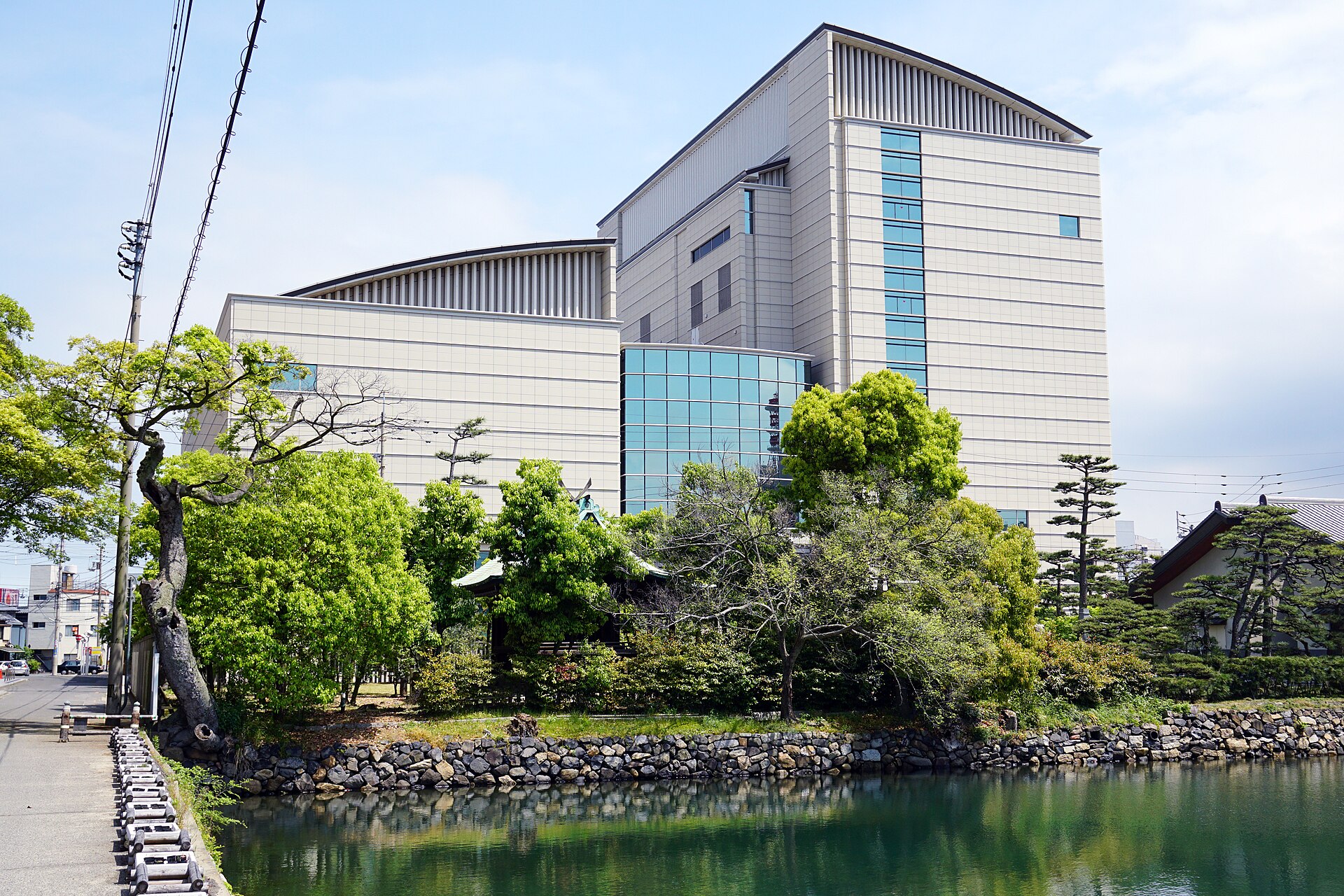
The Kagawa Museum in Takamatsu, photographed on 4 May 2015. Historical venue context; this does not show the 2026 Kagawa Landscapes display or its artworks. Photo title: “150504 The Kagawa Museum Takamatsu Kagawa pref Japan01n.jpg”. Wikimedia Commons resized this version; no further edits.
Visitor verdict
Look at how each artist chooses to describe a place. Nakamura Eisuke’s Inokuma Residence (1979) finds an old house in a changing town, while Tanaka Takashi’s The Last Day of the Salt Fields (1972) records the year Kagawa’s salt fields were abolished. Fujishima Takeji’s Sunrise over Mount Goken (1932) captures a passing moment of dawn from Yashima. Kado Taku’s 艶景(讃山) (1983) brings several landmarks together symbolically, rather than painting a single literal view; Takeda Saburo’s Motoyamaji Temple (1980) uses the lines, restrained colour and empty spaces of a woodcut. The two rotating works offer another comparison. Nakanishi Toshio’s Ritsurin Garden (1936), a watercolour arranging the garden in layers before Mount Shiun, is shown only from 1 September to 12 October. Hirayama Ikuo’s Tsuda Pine Grove (1988), with blue sea and a golden sky beyond the pines, follows from 14 October to 13 December. The museum is closed for the changeover on 13 October; the seven works are not all on view at once.
Visitor friendliness
5 means easier and more rewarding for first-time visitors.
- Language friendliness
- Not scored
- Reservation ease
- Not scored
- Transport ease
- Not scored
- Crowd comfort
- Not scored
- Rain resilience
- Not scored
Practical information
- Reservation
- Not confirmed
- Tickets / booking
- General admission is ¥500, or ¥400 per adult in a group of at least 20. Admission is free for high-school students and younger visitors, Kagawa residents aged 65 or over, and holders of the specified disability or medical-assistance certificates and their carers; bring the required proof. Admission is also free on 3 December, Kagawa Prefecture Day. During the overlapping Otoroshii Mon special exhibition, its ticket includes this collection display. Curator talks require exhibition admission but have no extra fee or advance application.
- Price note
- General ¥500; adult groups of 20+ ¥400 per person. Defined age, residency and certificate exemptions apply. Free admission on 3 December.
- Access
- Go to Permanent Exhibition Room 2 on the second floor of The Kagawa Museum, 5-5 Tamamocho, Takamatsu. The museum is 900 metres east of JR Takamatsu Station, 800 metres east of Kotoden Takamatsu-Chikko Station, or 500 metres north of Kataharamachi Station. From the Kenmin Hall / Kenritsu Museum bus stop, walk 200 metres south. Seismic work restricts the east-side parking and bicycle area; use the temporary bicycle parking to the north. This restriction does not close the whole museum.
- Rain
- The paintings and prints are indoors, making the exhibition a practical part of a rainy Takamatsu day. The approach from the stations is outdoors, and the museum’s listed closure dates still apply. On 19–23 September, the extended opening gives you until 20:00, with last admission at 19:30.
- Crowds
- Upcoming curator talks begin at 14:00 on 4 October, 28 November and 6 December in the exhibition room. An evening talk takes place at 18:30 on 22 September; the 12 September talk has already finished. No advance application is needed, but no capacity or finishing time is published. On 19–20 September, separate museum activities make the library corner unavailable from 09:00 to 20:00 and the hands-on learning room unavailable from 13:00 to 20:00.
Recommended for
Visitors interested in Kagawa’s landscape, local history or the differences between oil painting, watercolour, woodcut and Japanese painting. The small selection rewards looking at individual works and gives a cultural dimension to places you may know from a map or an outdoor visit.
Not recommended for
This is a focused collection display, so it will not suit someone expecting a large survey exhibition. If one of the two rotating works is your main reason to go, choose its phase carefully: a single visit cannot include both Ritsurin Garden and Tsuda Pine Grove.
Nearby / itinerary
- Nearby spots
- The exhibition offers connections for a wider Kagawa itinerary: Ritsurin Garden, Yashima and Motoyamaji appear in the works. These are separate sightseeing stops, not parts of the exhibition ticket or a single short walking route. Choose the Ritsurin Garden phase if you want to compare Nakanishi’s watercolour with a garden visit.
- Itinerary hint
- First choose your date around the rotating work you want to see, then check the full closure list. Compare a view shaped by industrial change with one built from colour, brushwork or woodcut lines, rather than treating every picture as a literal guide to today’s scenery. For a talk, plan around its stated starting time. The museum’s exhibition page gives the current display and programme, while its construction notice explains the parking restrictions. The work is scheduled through 22 December but may change; check that notice before driving or cycling.
Source and updates
- Primary source
- The Kagawa Museum / Kagawa Prefecture
- Event verified
- Sep 18, 2026
- Source checked
- Sep 18, 2026
Details can change after publication. Always confirm dates, tickets, access, and cancellation notices with the official source before you go.