Showa Life: Postwar Phase
The Kagawa Museum’s postwar chapter of Showa Life examines how everyday life changed as electricity spread through Kagawa. Marking 100 years since the start of the Showa era in 1926, it uses familiar household objects and local records to connect larger social changes with individual lives.
Travel action
Open the route before you go
Use Google Maps as the final navigation check. Event areas, crowd controls, and station exits can change on the day.Event area
Check the venue or main event area and save it before leaving your hotel.
Nearest station
Check the station-side approach and keep one backup return route.
Photos
Photos and place context
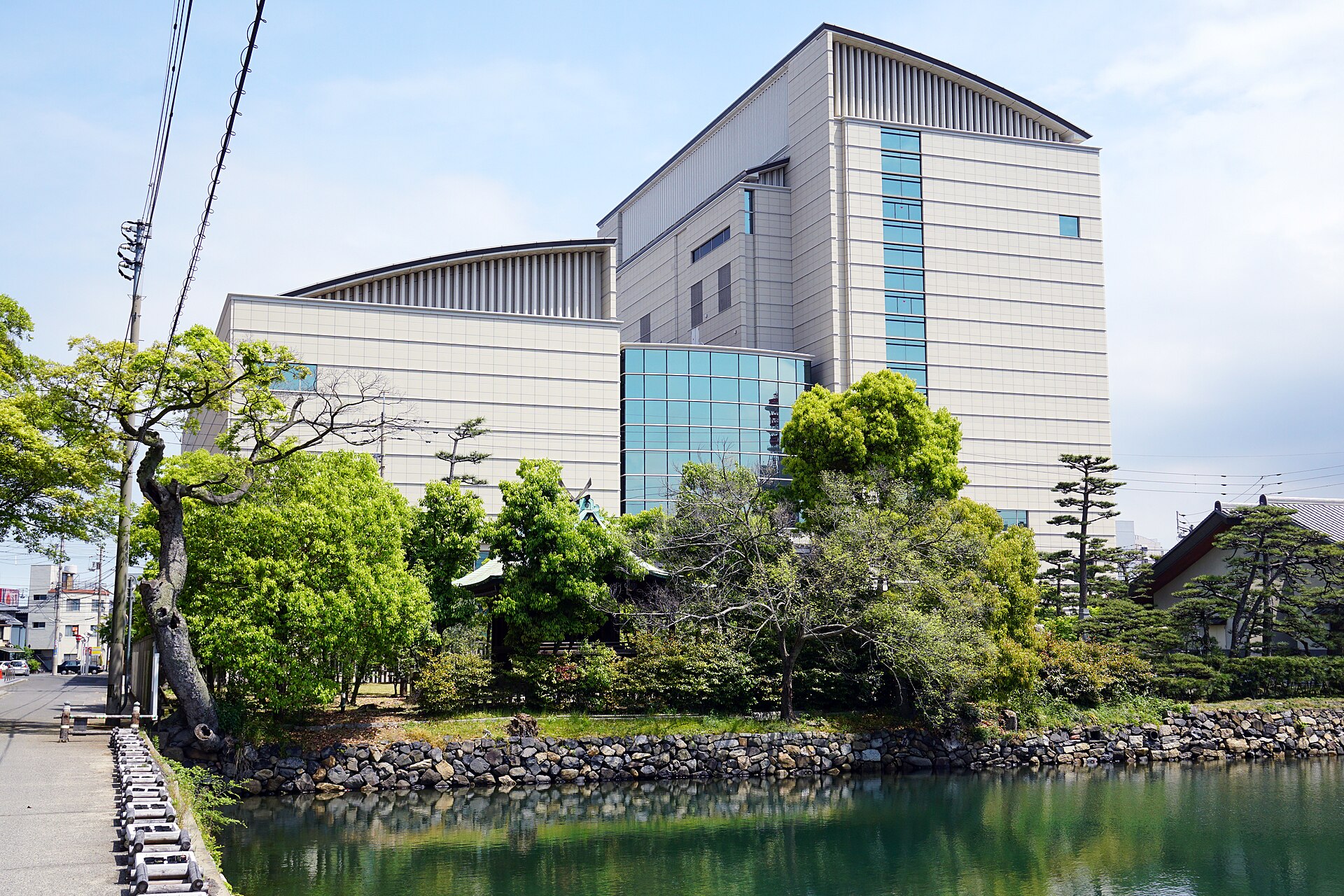
The Kagawa Museum in Takamatsu, photographed on 4 May 2015. Venue context only: this does not show the objects or rooms in the 2026 Showa postwar-life display. Photo title: “150504 The Kagawa Museum Takamatsu Kagawa pref Japan01n.jpg”. Wikimedia Commons resized this version; no further edits.
Visitor verdict
Three objects offer a useful route through the exhibition. A visitor guide to the 1949 Takamatsu Tourism Exposition links the rebuilding of a city damaged by wartime air raids with the promotion of local sights and products. A 1956 Toshiba ER-5 electric rice cooker, used in a household in what is now Higashikagawa, brings that story into the kitchen. A hand-knitted sweater from the Showa 30s, roughly 1955–1964, adds the perspective of someone who learned knitting and dressmaking after work and followed a pattern in Kurashi no Techo magazine. Together, these objects let you compare public reconstruction, domestic technology and handmade clothing. The earlier prewar and wartime phase ended on 6 September; the current display is the postwar phase.
Visitor friendliness
5 means easier and more rewarding for first-time visitors.
- Language friendliness
- Not scored
- Reservation ease
- Not scored
- Transport ease
- Not scored
- Crowd comfort
- Not scored
- Rain resilience
- Not scored
Practical information
- Reservation
- Not confirmed
- Tickets / booking
- Adults pay ¥500, or ¥400 per person in adult groups of 20 or more. Admission is free for high-school students and younger visitors, Kagawa residents aged 65 or over, and holders of the specified disability or medical certificates and their caregivers; bring proof. During the run of Otoroshii Mon, its special-exhibition ticket also covers this permanent-gallery display. Museum talks on 26 September and 25 October at 14:00, and the 23 September night talk at 18:30, have no additional fee but require an exhibition ticket.
- Price note
- Adults ¥500; adult groups of 20+ ¥400. High-school students and younger visitors, eligible Kagawa residents aged 65+ and specified certificate holders with caregivers enter free with proof.
- Access
- Use the second-floor permanent exhibition rooms 4 and 5 at 5-5 Tamamocho. The museum is 900 m east of JR Takamatsu Station, 800 m east of Kotoden Takamatsu-Chikko Station or 500 m north of Kataharamachi Station. East-side piloti parking and bicycle parking are restricted by earthquake-resistance work, planned through 22 December 2026. The completion date may change. Use the temporary bicycle area on the north side and consult the current construction notice if arriving by car.
- Rain
- The exhibition is indoors. The 19–23 September evening opening, until 20:00 with last entry at 19:30, gives more flexibility when fitting it around an outdoor walk. On other open days, last entry is 16:30.
- Crowds
- On 19 and 20 September, the library corner is unavailable from 09:00 to 20:00 and the learning room from 13:00 to 20:00. These are facility restrictions, separate from the exhibition’s opening hours. Do not plan on using those spaces between visits to the galleries.
Recommended for
A strong fit for visitors interested in social history, household design and life in regional Japan. The familiar scale of a rice cooker, a sweater and an exhibition guide makes this a useful companion to Takamatsu’s larger monuments.
Not recommended for
This phase focuses on individual objects and local postwar history in permanent exhibition rooms 4 and 5. Visitors seeking the earlier prewar and wartime chapter should note that it is no longer on view.
Nearby / itinerary
- Nearby spots
- Tamamo Park is next to the museum. A visit there can provide an outdoor counterpart to the exhibition’s account of modern everyday life, with its own admission and opening arrangements.
- Itinerary hint
- Follow the objects from the 1949 exposition to the electric kitchen and handmade clothing, then compare what changed in public and private life. If combining this with Otoroshii Mon during their overlap, use the special-exhibition ticket for both. Check the full closure list before booking travel: 16–21 October is a continuous closure within the advertised exhibition period.
Source and updates
- Primary source
- The Kagawa Museum
- Event verified
- Sep 18, 2026
- Source checked
- Sep 18, 2026
Details can change after publication. Always confirm dates, tickets, access, and cancellation notices with the official source before you go.