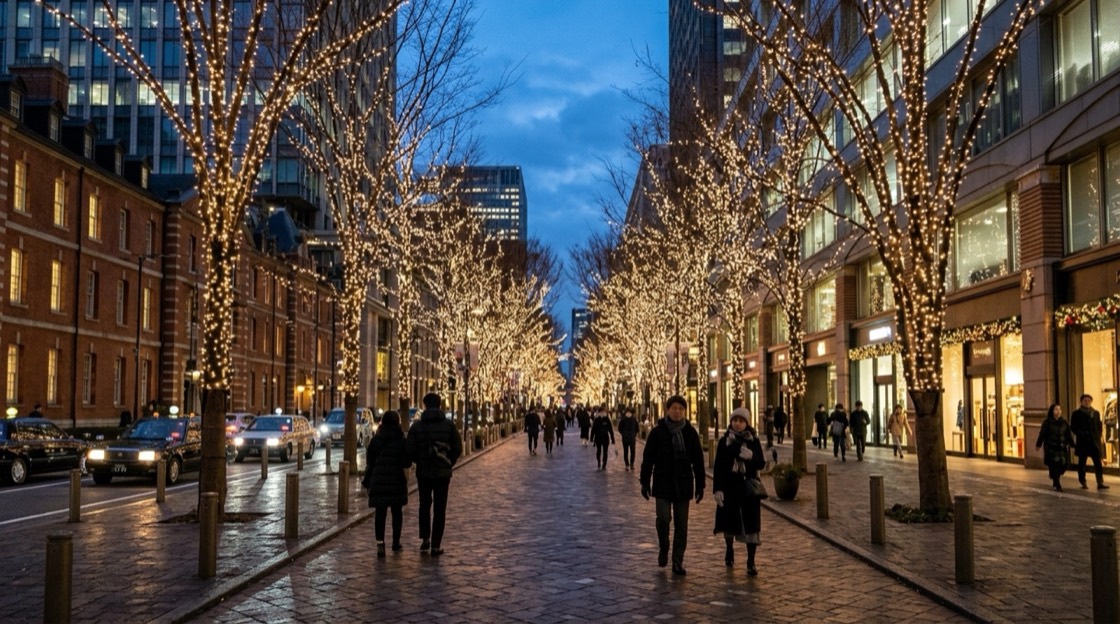
Marunouchi Illumination 2026–2027
1.2 km of champagne-gold trees steps from Tokyo Station with direct underground rain backups and free nightly viewing.
Japan trip planning with destination, timing, and events
Start with a destination or travel window, then use events and practical guidance to shape your Japan trip.
Winter 2026–2027 Editorial Briefing
Between late November and March, Japan's travel rhythm shifts from autumn foliage to citywide illuminations, European-style Christmas markets, year-end temple fairs, and Hokkaido's snow-sculpture season.
Most travel sites list dozens of seasonal events without explaining how staggered end dates, early 16:30 sunsets, and holiday transit spikes interact on the ground. In December, headline displays such as Roppongi Keyakizaka and Sapporo Odori Park close on December 25, while Marunouchi Illumination, Hiroshima Dreamination, and Nagoya's Nabana no Sato stay open into January, February, or spring.
Planning around these exact windows lets you combine high-reward evening walks with daytime museums and regional rail legs—without paying peak rates unnecessarily or arriving the day after a market wraps up.
1.2 km of champagne-gold trees steps from Tokyo Station with direct underground rain backups and free nightly viewing.
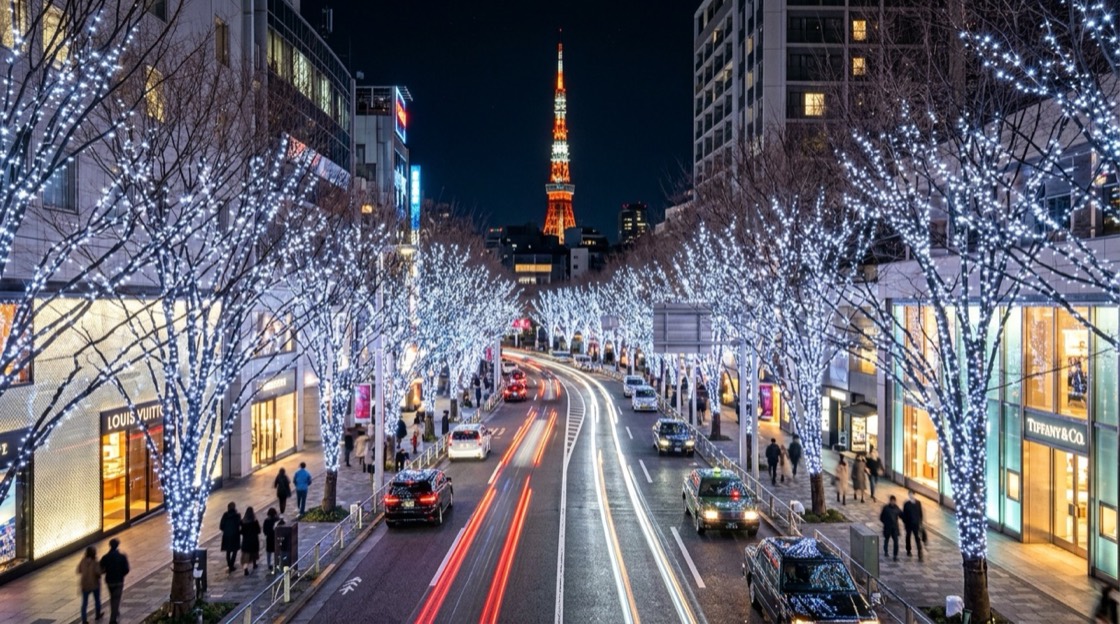
Tokyo Tower framed down 400 meters of silver-blue trees plus the covered O-Yane Plaza German Christmas Market.
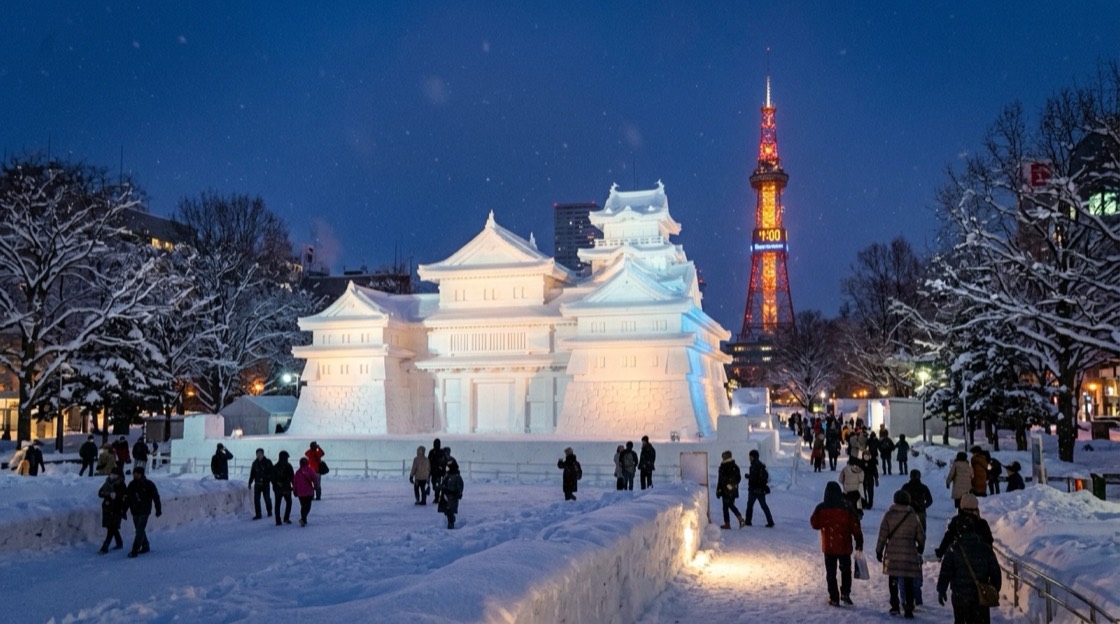
Monumental snow sculptures in Odori Park, illuminated Susukino ice carvings, and family snow slides at Tsudome.
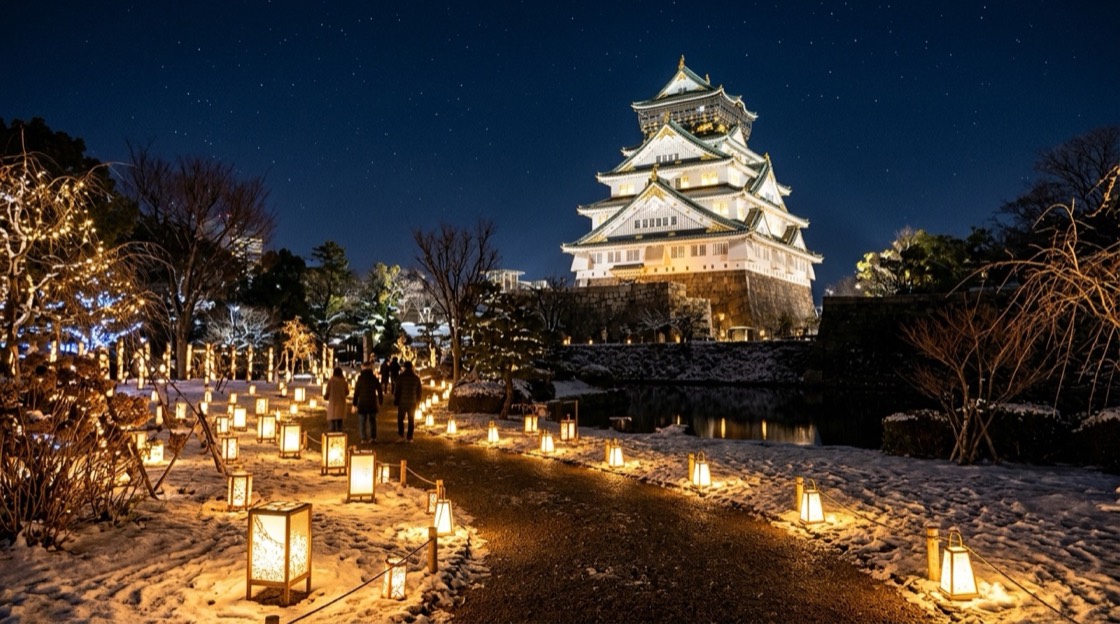
Themed light installations inside Nishinomaru Garden with the illuminated Osaka Castle keep rising directly behind the displays.
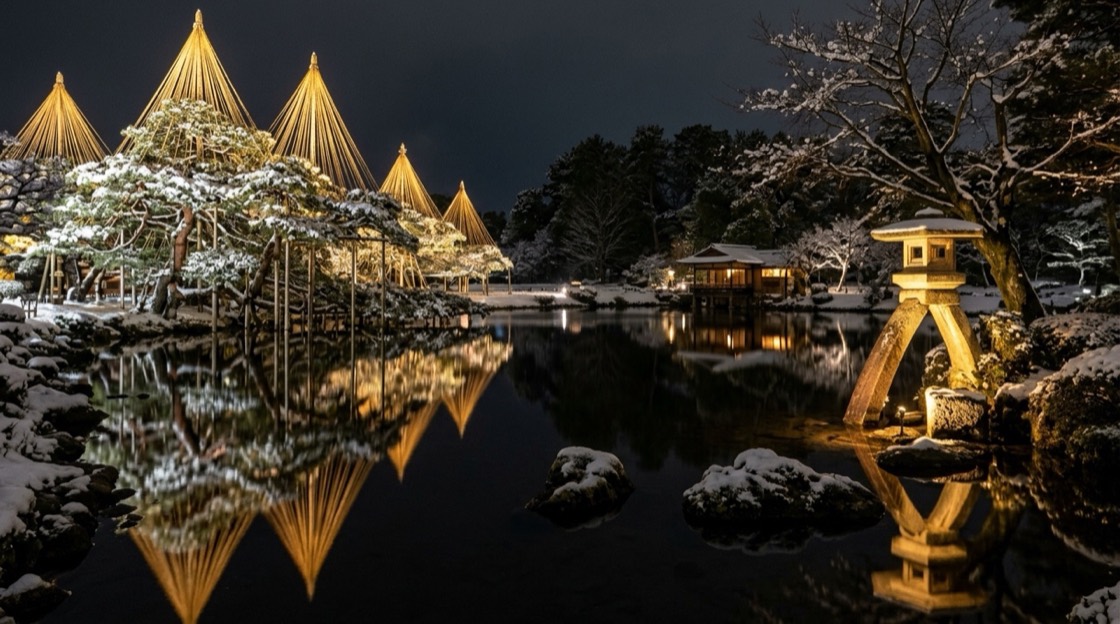
Golden-lit yukitsuri snow-rope pines reflecting across Kasumigaike Pond—Japan's quintessential Hokuriku winter garden spectacle.
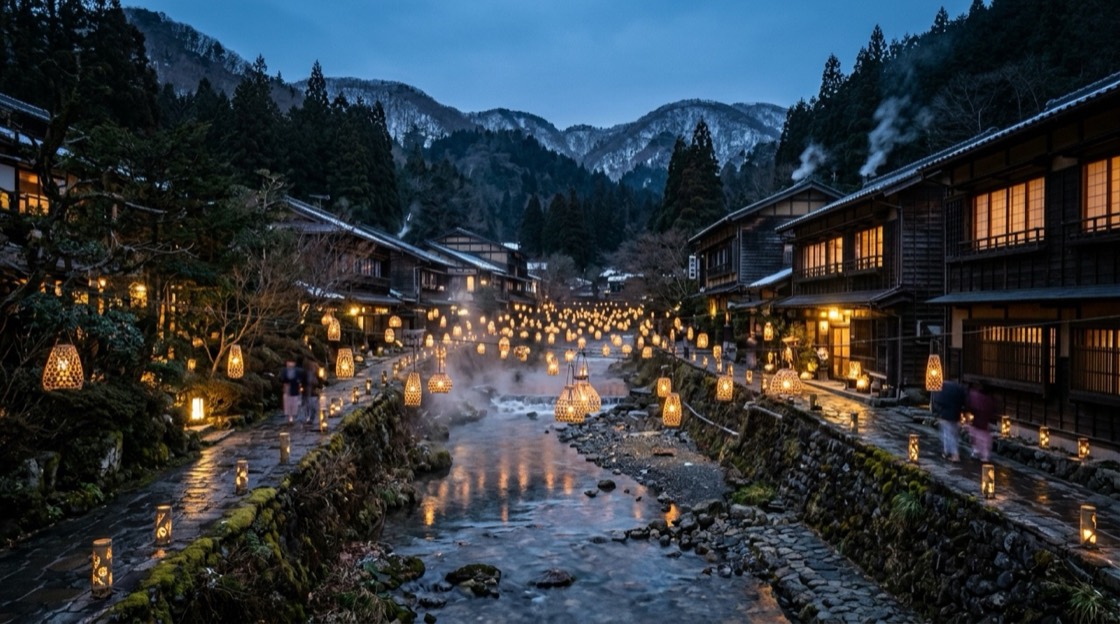
300+ handcrafted bamboo lanterns glowing above steaming hot-spring rivers every evening through March 31.
Every event guide on MyJPTrip is written independently by our bilingual editorial team after verifying official Japanese municipal, shrine, museum, or organizer notices. Instead of copying short press blurbs, we break down station exits, weather and snow contingencies, crowd dispersal windows, and realistic nearby pairings.
Once a seasonal event ends, it is automatically archived and removed from active discovery queues so travelers always see current, actionable guides first.
Free Interactive Winter Planning Toolkit
No account required—instantly match 80 events, check 17-city Suica rules, estimate Takkyubin bag delivery, calculate Nov 2026 tax-free refunds, and compare rail & airport fares.
Enter your Japan arrival & departure dates to filter 80 active illuminations, snow festivals, cherry blossoms, May festivals & June hydrangeas across all 17 cities, save favorites, and export .ics reminders.
Match my dates →Toggle 10 popular Shinkansen & airport rail legs to see immediately whether single tickets beat the ¥50,000 7-day or ¥80,000 14-day JR Pass.
Compare rail fares →Check before boarding: Kumamoto local buses, Kagoshima trams & Sakurajima ferry, regular Kanazawa Hokutetsu buses, Kochi, and JR Shikoku do NOT accept Suica—see exact city rules.
Check my cities →Estimate Yamato/Sagawa hotel-to-hotel suitcase delivery costs, afternoon drop-off cutoffs, 160 cm Shinkansen rules, and front-desk Japanese phrases.
Plan bag delivery →Calculate refunds under Japan's Nov 2026 Refund-on-Departure (リファンド方式) rules: verify the ¥5,000 threshold (8% food vs. 10% goods) and pre-drop Customs scan tips.
Calculate tax-free →Estimate on-the-ground lodging, meals, local transit, peak Snow Festival surcharges, and physical yen cash needed for shrine markets.
Estimate budget →Compare NRT, HND, KIX, CTS, FUK & NGO arrival trains and buses by time, fare, JR Pass rules, and Hokkaido snow-delay backups.
Compare airports →Compare average highs, lows, snowfall, and exact local sunset times across 17 Japanese cities from Dec through May so you dress right and arrive for blue hour.
View 17-city matrix →Plan around Dec 29–Jan 3 Oshogatsu closures, all-reserved Nozomi Shinkansen periods, and the Feb 2027 Snow Festival × Lunar New Year overlap.
Check holiday dates →Start planning here
Find practical answers by task, from your first route decision to destination walks and event days.
Choose your route, compare transport and work out your first transfer.
Compare places that fit together before filling every day with stops.
Check tickets, weather and the journey home before committing to a date.
Find your travel window
Travel month
November 2026Autumn routes and evening visitsCompare autumn walks with booked exhibitions and night visits. Check the exact opening date and journey home before putting two places into the same day.
Check each event calendar against your travel date
Travel month
December 2026Winter lights and city eveningsPlan a compact evening around winter illuminations, with time for a meal and your last connection. A December listing does not mean every installation runs all month.
Check each event calendar against your travel date
Past month
October 2026 archivePast dates and exhibitions spanning monthsOctober has ended. Keep festival pages as dated route references; some exhibitions that opened in October continue later. Use the event's own dates for a new visit.
Dated archive; no next-edition dates implied
Choose a base for nearby routes, or open the destination directory to compare regions.
Compare city neighborhoods, exhibitions and day trips before choosing your base.
City routes and nearby outingsBuild a day around one temple area, a cultural visit or a riverside route.
Culture, walking and seasonal visits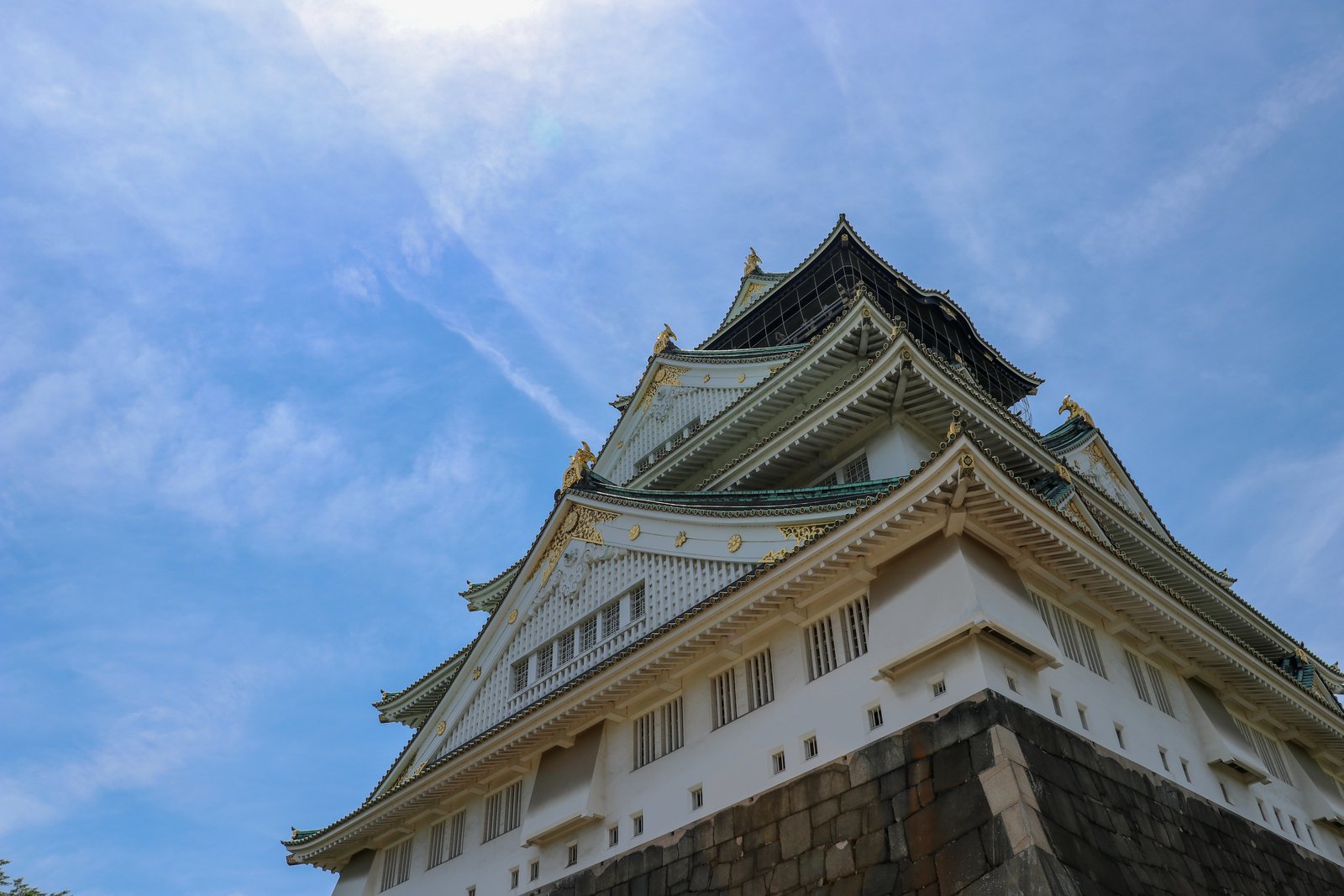
Photo: Site ownerOwner-provided site photo
Connect food stops, city sights and an evening route without unnecessary backtracking.
Food, city walks and eveningsExplore Hokkaido, central Japan and regional bases through the full directory.
Compare regions and routesWinter 2026–2027 Planning Q&A
Practical answers on illumination closing dates, New Year holiday closures, snow festival tickets, winter packing, and rail reservations.
Only some do. Roppongi Keyakizaka, Fukuoka Christmas Advent, and Sapporo Odori Park's main Christmas displays close on December 25. However, Tokyo Marunouchi Illumination (through Feb 14), Osaka Castle Illuminage (through Feb 1), Hiroshima Dreamination (through Jan 24), Matsumoto Castle Projection Mapping (through Feb 14), Nagoya Nabana no Sato (through May), and Kumamoto Kurokawa Onsen Yuakari (through Mar 31) all continue well into 2027.
Many national museums, historic castle keeps, and family-run restaurants close between December 29 and January 3. By contrast, major Shinto shrines (Hatsumode), JR rail lines, department-store food halls (from Jan 2), and outdoor winter illuminations remain open. Schedule museum days before Dec 28 or from Jan 4 onward.
No general entry ticket is required for the three official Snow Festival venues (Odori Park, Susukino, and Tsudome)—all are free to walk through. What sells out months ahead are central Sapporo hotels and domestic flights from Tokyo/Osaka around February 4–11.
Tokyo Marunouchi Illumination, Roppongi Keyakizaka, Yokohama Yorunoyo, Yokohama Chinatown Shunsetsu Toka, Sapporo White Illumination, Hiroshima Dreamination, Okayama Momotaroh Fantasy, Matsumoto Castle Projection Mapping, Kochi Chuo Park, Kagoshima AMU Plaza, Tokushima Asutamuland, and Kurokawa Onsen Yuakari are all free to enter.
Tokyo, Osaka, Kyoto, Hiroshima, and Fukuoka average 2°C–11°C with crisp, mostly dry winter sunshine—a warm coat, scarf, and comfortable walking shoes work well. Sapporo, Kanazawa, and Matsumoto drop below freezing with packed snow or black ice, requiring waterproof insulated boots with high-grip soles or clip-on traction cleats.
On normal winter weekdays, unreserved Shinkansen seats are easy to board. However, during Japan's Year-End/New Year rush (Dec 27 – Jan 4), when the Tokaido Shinkansen Nozomi becomes all-reserved, and around national holidays (Jan 11, Feb 11, Feb 23), reserve seats early via SmartEX or JR ticket offices.
For a classic Tokyo–Kyoto–Osaka round trip (~¥29,000 in single tickets), buying individual Shinkansen tickets is roughly ¥21,000 cheaper than a 7-day national JR Pass. The national pass usually only pays off if you pack Tokyo–Hiroshima–Fukuoka or Kanazawa–Sapporo long-distance legs into 7 consecutive days—use our free JR Pass calculator on the Guides page to check your exact route.
Yes, if your suitcase's total dimensions (length + width + height) exceed 160 cm and up to 250 cm on Tokaido, Sanyo, Kyushu, or Nishi-Kyushu Shinkansen trains. Reserving an 'Oversized Baggage Area' seat is free when booking; boarding without a reservation incurs a ¥1,000 fee. Standard carry-ons and suitcases under 160 cm fit overhead with no special reservation.
No. While Tokyo, Yokohama, Kyoto, Osaka, Nagoya, Fukuoka, and Hiroshima accept nationwide IC cards almost everywhere, major exceptions exist: Kumamoto local buses ended nationwide IC in Nov 2024 (though Kumamoto City Trams keep it), Kagoshima trams and the Sakurajima Ferry do not take Suica (use contactless Visa/JCB/Mastercard tap or cash), regular Hokutetsu buses in Kanazawa require credit tap or cash, and Kochi trams/buses plus JR Shikoku stations outside Kagawa are cash-first. Check our interactive 17-city IC card checker on the Guides page before riding.
Hand your suitcase to your hotel reception by 15:00–17:00 the day before checkout (or 2 days prior when shipping to/from Hokkaido or airports) and Yamato/Sagawa delivers it straight to your next hotel for roughly ¥1,920–¥3,350 per bag. Keep one night's essentials and your physical passport in a daypack, and skip sold-out station coin lockers.
Starting November 1, 2026, Japan uses the Refund-on-Departure (リファンド方式) system: pay the full tax-included price (8% food/medicine or 10% standard goods) at participating stores with ≥ ¥5,000 tax-excluded spend and register your passport. Old sealed consumable plastic bags and the ¥500,000 cap are abolished, but you must keep goods unused inside Japan and clear Customs passport scan before checking bags at your departure airport within 90 days.
During Golden Week, ALL Tokaido/Sanyo Shinkansen Nozomi trains run 100% all-reserved (0 unreserved seats), so book early via SmartEX. Immediately after May 6, hotel rates drop while Kyoto Aoi Matsuri (May 15), Tokyo Sanja Matsuri (May 14–16), Sapporo Lilac Festival, and Craft Fair Matsumoto run cleanly with dry May weather.

