12th Chin Jukan and Naeshirogawa
Reimeikan marks 120 years since the death of the 12th Chin Jukan (1835–1906) with ceramics and documents tracing his work and the history of Naeshirogawa. The exhibition connects a community descended from Korean potters with Satsuma ware’s development for overseas markets, bringing objects, designs and business records into the same story.
Travel action
Open the route before you go
Use Google Maps as the final navigation check. Event areas, crowd controls, and station exits can change on the day.Event area
Check the venue or main event area and save it before leaving your hotel.
Nearest station
Check the station-side approach and keep one backup return route.
Photos
Photos and place context
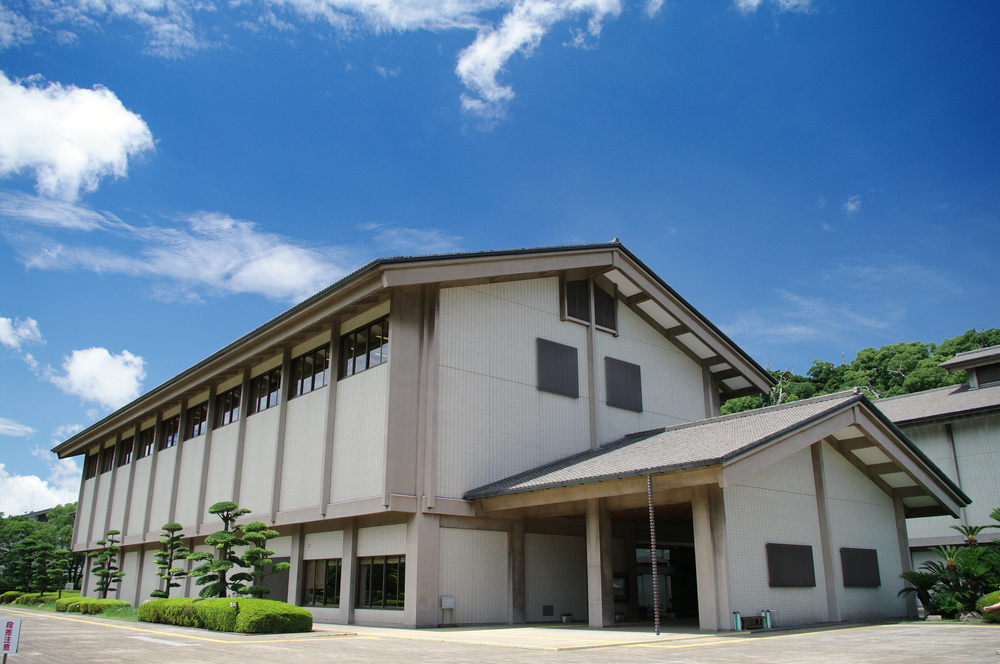
Reimeikan in Kagoshima City, photographed in July 2008. Historical venue context; not the 2026 exhibition display. Photo title: “Reimeikan.jpg”. Original image, unchanged locally.
Photo: Krypton at Japanese WikipediasourceCC BY-SA 3.0
Visitor verdict
Look closely at the decorated tiger and Ohara-woman figures by the 12th Chin Jukan, both from the later nineteenth century. Their modelled shapes offer a different way to understand ceramic decoration from the broad painted surface of an 1857 blue-and-white dish showing pine, bamboo, plum, cranes and tortoises. Comparing the figures and the dish makes the range of form and ornament concrete. Documents widen that view beyond individual objects. A Naeshirogawa history record connects the ceramics with the community, while an 1892 catalogue of items intended for the Chicago exposition reveals the world of overseas display and trade. The exhibition follows Korean customs retained under the domain’s protection and control, and Chin Jukan’s pottery enterprise, 玉光山陶器製造場. Read the vessels and figures alongside those records to see how local production became part of a wider commercial story.
Visitor friendliness
5 means easier and more rewarding for first-time visitors.
- Language friendliness
- Not scored
- Reservation ease
- Not scored
- Transport ease
- Not scored
- Crowd comfort
- Not scored
- Rain resilience
- Not scored
Practical information
- Reservation
- Not confirmed
- Tickets / booking
- The permanent-gallery admission covers this exhibition: adults ¥430, high-school/university students ¥270 and elementary/junior-high students ¥160; groups of 20 or more pay ¥320/¥160/¥90 respectively. Eligible disability-certificate holders and one caregiver enter free. Kagoshima residents aged 70+ enter free with ID; residents aged 18 or younger enter free on weekends and public holidays with ID. Gallery explanations need no application but require admission: 26 September, 10 October and 25 October, 13:30–14:10; 14 November, 15:10–15:50. The separate 14 November lecture runs 13:30–15:00 in the third-floor lecture room. Its electronic/postcard application period is 16–30 October, so applications are not yet open as of 18 September. Use the museum’s current lecture instructions when the window opens; places have not been confirmed here.
- Price note
- Adults ¥430; high-school/university students ¥270; elementary/junior-high students ¥160. Groups of 20+ ¥320/¥160/¥90. Eligible resident and disability concessions require proof.
- Access
- Go to Reimeikan’s third-floor planned exhibition room at 7-2 Shiroyamacho, Kagoshima City. The official flyer lists a 15-minute walk from JR Kagoshima Station, or a seven-minute walk from Shiyakushomae or Suizokukanguchi tram/bus stops. The sightseeing bus stops beside the museum at Satsumagishihimae. For the November lecture, use the third-floor lecture room rather than going straight to the exhibition gallery.
- Rain
- The exhibition is indoors, making the ceramic objects and documents a practical focus for a wet day. Account for the outdoor walk from your stop, and arrive before the 17:30 last-entry time rather than using the 18:00 closing time as your target.
- Crowds
- Check the closure calendar before choosing a date: Mondays are closed except 21 September, 12 October and 23 November. Additional closures are 24–25 September, 13 October and 24–25 November. The November lecture has advance applications; the four gallery explanations have a different, no-application arrangement.
Recommended for
Visitors interested in ceramics, decorative design and regional history, especially how a pottery community’s traditions met overseas demand. The combination of objects and documents gives this visit more historical depth than looking at ceramic forms alone.
Not recommended for
This is a museum exhibition at Reimeikan in Kagoshima City. It is not a hands-on pottery session or a kiln visit in Hioki’s pottery village; those would require a separate destination and plan.
Nearby / itinerary
- Nearby spots
- Keep this visit anchored in Kagoshima City’s Shiroyamacho area. Naeshirogawa is the historical pottery community explored in the display, not the address of the exhibition. A trip to the present pottery area in Hioki would be a separate outing rather than a walk between the museum’s galleries.
- Itinerary hint
- Begin with the tiger and Ohara-woman figures, then compare their shaped surfaces with the 1857 dish. Use the community record and the 1892 catalogue to connect those objects with production and overseas trade. If choosing a gallery-explanation day, arrange the visit around its published time. Reimeikan’s exhibition page provides closures, fees and explanation dates; its linked flyer introduces the works and the separate lecture’s application window.
Source and updates
- Primary source
- Kagoshima Prefecture / Reimeikan
- Event verified
- Sep 18, 2026
- Source checked
- Sep 18, 2026
Details can change after publication. Always confirm dates, tickets, access, and cancellation notices with the official source before you go.